
Not Virtual

Linnar Viik John Robb quotes an Estonian on a basic point:
“This is not some virtual world. This is part of our independence. And these attacks were an attempt to take one country back to the cave, back to the Stone Age.”
Linnar Viik, an Estonian government IT consultant to the Washington Post.

Internet Systems Disruption, John Robb, Global Guerrillas, 21 May 2007

A society is its communications, and increasingly the Internet is the matrix of those communications. Such communications are virtual only in the same sense that society is virtual. And it doesn’t take an attack by a foreign power to disrupt those communications. Too few ISP owners can reduce participatory communications to limited broadcast, just as has already happened in radio.

-jsq

Slow and Expensive U.S.

Larry Cohen, President, CWA Speed is trivial, but you’d think we could do better than this:
The average broadband download speed in the US is only 1.9 megabits per second, compared to 61 Mbps in Japan, 45 Mbps in South Korea, 18 Mbps in Sweden, 17 Mpbs in France, and 7 Mbps in Canada, according to the Communication Workers of America.

US high-speed Internet is slow, Submitted by Canada IFP, Press Esc, on Sun, 2007-05-20

And as we’ve seen, that list of countries could soon include Hong Kong and India, because they’re taking the problem seriously. More interesting was this was said to. Continue reading

Eerily Familiar

Office of the Army Chief Information Officer The Pentagon video and blogging ban is circumventable primarily due to multiple Internet providers in Iraq:
Deployed troops can still post their videos to YouTube, despite the recently announced Pentagon ban against accessing that site and ten others from government computers. The trick, says Rear Admiral Elizabeth Hight, is to use your own internet access or visit one of the rec center internet cafes, which plug into separate, commercial networks. The ban, she says, applies only to the 5 million computers worldwide connected to the official Department of Defense intranet.

Getting Around the YouTube Blockade, David Axe, DangerRoom, 17 May 2007

I suppose we could resort to going to the local Internet cafe to get around such bans if they occur stateside. Continue reading

Communications Monopoly

Adm. Elizabeth A. Hight Here’s what happens when you have a communications monopoly:
The Defense Department isn’t trying to “muzzle” troops by banning YouTube and MySpace on their networks, a top military information technology officer tells DANGER ROOM. Rear Admiral Elizabeth Hight, Deputy Commander of Joint Task Force-Global Network Operations, says that the decision to block access to social networking, video-sharing, and other “recreational” sites is purely at attempt to “preserve military bandwidth for operational missions.”

Computer_center_400x Not that the 11 blocked sites are clogging networks all that much today, she adds. But YouTube, MySpace, and the like “could present a potential problem,” at some point in the future. So the military wanted to “get ahead of the problem before it became a problem.”

Military Defends MySpace Ban (Updated Yet Again), Noah Schachtman, DangerRoom, 18 May 2007

How much bandwidth is it using? We don’t know; the Admiral won’t say.

Now if the U.S. military’s real reason is to keep the troops from posting information that could get some of them killed, I could understand that. But if so, why are they trotting out this lame excuse? And for that matter, why is the U.S. commander in Iraq saying military blogs are providing good accurate descriptions of the situation on the ground? Continue reading

Reemphasizing Innovation

Pointing out the tiny little problem with globalization, namely that with fast global data networks many jobs from doctors and lawyers to clerks become offshoreable, an economist tries to look ahead:
What else is to be done? Trade protection won’t work. You can’t block electrons from crossing national borders. Because U.S. labor cannot compete on price, we must reemphasize the things that have kept us on top of the economic food chain for so long: technology, innovation, entrepreneurship, adaptability and the like. That means more science and engineering, more spending on R&D, keeping our capital markets big and vibrant, and not letting ourselves get locked into “sunset” industries.

Alan Blinder: Free Trade’s Great, but Offshoring Rattles Me, Grasping Reality with Both Hands: Brad DeLong’s Semi-Daily Journal, 5 May 2007 quoting Free Trade’s Great, but Offshoring Rattles Me, By Alan S. Blinder Washington Post, Sunday, May 6, 2007; B04

If this is the case, then it would seem that promoting innovation by promoting a fast, open, and participatory Internet would be important for the U.S., and also important to the rest of the rest of the world that wants the U.S. to remain a major market.

-jsq

Student Loan Regulatorium

This is a kind of thing that can happen when the regulators aren’t really interested in regulating:
When Jon Oberg, a Department of Education researcher, warned in 2003 that student lending companies were improperly collecting hundreds of millions in federal subsidies and suggested how to correct the problem, his supervisor told him to work on something else.

Jon Oberg, a former Department of Education researcher, warned that student loan companies were abusing a subsidy program and collecting millions in federal payments to which they were not entitled.

The department “does not have an intramural program of research on postsecondary education finance,” the supervisor, Grover Whitehurst, a political appointee, wrote in a November 2003 e-mail message to Mr. Oberg, a civil servant who was soon to retire. “In the 18 months you have remaining, I will expect your time and talents to be directed primarily to our business of conceptualizing, competing and monitoring research grants.”

For three more years, the vast overpayments continued.

Whistle-Blower on Student Aid Is Vindicated, By Sam Dillon, The New York Times, May 7, 2007

It wasn’t so much turning a blind eye, as claiming there was no eye.

Could this happen in the U.S. telecom/ISP regulatorium?

-jsq

Chief Parsons

Gen. Custer
Chief Parsons
Chief Sitting Bull
This is the funniest thing I’ve seen in a while. Time-Warner CEO Richard Parsons says:
“The Googles of the world, they are the Custer of the modern world. We are the Sioux Nation. They will lose this war if they go to war. The notion that the new kids on the block have taken over is a false notion.”

The Fighting Sioux, by Gunnar Peterson, 1 Raindrop, 11 May 2007

Which is amusing enough. Time-Warner thinks the cablecos and telcos are the original natives of the Internet? I beg to differ. Google, Yahoo!, YouTube, etc. are much more in the spirit of the original creators of the Internet technology and of the people who originally commercialized and privatized the Internet. Continue reading

Speed Is Trivial

Sometimes Bob Frankston makes me shake my head in wonder:
Speed is trivial — the dial up modem completely trounced the entire Interactive TV industry thanks to the web which gave people a reason to find their own solutions without waiting for a service provider to deign to provision a path. As long as you don’t over-defined the solution you’ll get speed — it’s hard not to.

Re: We’re Stuck In The Slow Lane Of The Information Trollway — it’s all about the billing relationship, Bob Frankston, Interesting People, Sat, 12 May 2007 20:13:50 -0400

Yes, back in the 1990s, video on demand and interactive TV were the big plans of the cablecos and telcos. They tried it. Users didn’t buy it. Instead, participants bought modems and the web boomed. Continue reading

Fire Participation

Now here’s an interesting use of the web:
InciWeb is an interagency wildland fire incident information management system. The system was developed with two primary missions: The first was to provide a standardized reporting tool for the Public Affairs community during the course of wildland fire incidents. The second was to provide the public a single source of information related to active wildland fire information.

A number of supporting systems automate the delivery of incident information to remote sources. This ensures that the information on active wildland fire is consistent, and the delivery is timely.

About InciWeb, Accessed 13 May 2007

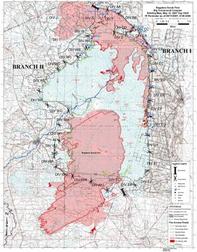
The small map is for the Bugaboo fire that started near Waycross Georgia and burned more than 300,000 acres through the Okefenokee swamp into Florida, as of 12 May 2007, with two interstates closed (I-10 and I-75). Sure you can read about it on CNN and other mass media; when they realized much of Florida was closed, they picked up on the story. Continue reading

Content-Delivery Supply-Chain Usefulness

Susan Crawford hits the broadband nail on the head:
What content-delivery supply-chain usefulness is broadband providing?

For, by Susan Crawford, Susan Crawford blog, 9 May 2007

That’s the question you get if you’re in a corporate strategy meeting trying to decide where this broadband thing fits in with your core competences. That plus they’ll be thinking purely in terms of broadband, because that’s their product, not the Internet. There’s nothing wrong with that, except when there are only a couple of first-mile ISPs deciding the answer for all their users. And the answer in such cases tends to be “video on demand” or “IPTV” or “our search engine”. Corporations are designed to maximize their own profits, not to think in terms of a supply chain that delivers participation, innovation, and prosperity for the general welfare. Continue reading