Time Warner Volume Charging

leaky_pipe.jpg Transparency via memo leak?
Metered Internet access is a fact of life for many broadband users around the world, but has been largely a nonfactor when it comes to wired broadband in the US. That may change, according to a memo leaked to the Broadband Reports forums. If the memo is to be believed, Time Warner Cable will be rolling out what it calls "Consumption Based Billing" on a trial basis in the Beaumont, Texas area.

Under the proposed scheme, new customers will be able to choose from a couple of different plans with varying bandwidth caps. They'll be given online tools to monitor usage and will be able to upgrade to the next higher tier of service to avoid charges for exceeding their monthly bandwidth limit. If the trial works well, Time Warner would then roll out bandwidth caps to current customers: "We will use the results of the trial to evaluate results for possible future nationwide rollouts," reads the memo.

Bandwidth caps have been a sore subject for some users who have found themselves bumping into mysterious, undefined limits. This past fall, a number of Comcast subscribers complained that their service was cut off after having reached Comcast's bandwidth limit.

Leaked memo: Time Warner Cable to trial hard bandwidth caps, By Eric Bangeman, ars technica, January 16, 2008 – 04:12PM CT
If the memo is legitimate, it’s good that Time Warner is going for more transparency. Although if they want transparency, why don’t they just come out and announce what they’re doing? Continue reading

Principles: the FCC’s Don’t Mean Squat –Cleland

fccprinciples.png Duopoly apologist Scott Cleland spells out what everybody should have already known:
The petitions assume that the FCC’s policy of network neutrality principles have the legal and binding effect of formal FCC rules or law and that they trump all existing law and rules. This is preposterous.

The Common Sense Case Why Network Management Trumps Net Neutrality, Scott Cleland, Precursor Blog, 15 Jan 2008

Indeed, it is preposterous to think that the FCC ever meant to enforce its net neutrality “Policy Statement” of August 2005. Even if it did, the very way the four “principles” in that statement are worded, every one in terms of consumers, excludes the very existence of participatory services such as BitTorrent.

Cleland’s blog goes to great lengths to spell out what he considers common sense (which means he knows he doesn’t actually have a legal argument). Don’t be surprised if his items get parrotted by other anti-Internet-freedom blogs. And don’t be surprised if the FCC rules in favor of Comcast, even though any competent network engineer can tell you that there are ways to do network management that don’t involve faking reset packets, a technique that would be considered malicious denial of service if it came from any entity other than an ISP, not to mention Comcast’s BitTorrent stifling seems closer to the fraudulent promise of unlimited service that got Verizon fined by New York State.

[Clarified:] It’s not about network management. It’s about a few corporations and their political allies trying to stifle net neutrality and Internet freedom against the best interests of everyone else, including their own customers.

-jsq

Forensic FCC Oversight

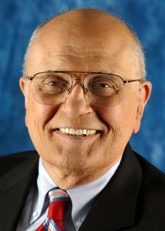
JDD_Headshot_2004.jpg Preventive Congressional oversight had no effect on the FCC. We’ll see if forensic oversight does any better:
Bipartisan leaders of the House Energy and Commerce Committee launched an investigation of the Federal Communications Commission on Tuesday, three weeks after the agency’s controversial vote to ease media ownership restrictions.

In a letter sent to FCC Chairman Kevin Martin, the committee asked that all electronic records and personal e-mails related to FCC work be saved.

The committee has “initiated a formal investigation into FCC regulatory procedures to determine if they are being conducted in a fair, open, efficient, and transparent manner,” said the letter written by Chairman John Dingell, a Michigan Democrat, and ranking Republican Joe Barton of Texas.

“This investigation will also address a growing number of allegations received by the committee relating to management practices that may adversely affect the agency’s operation,” the letter said.

House panel launches probe of FCC practices, Reuters, Tue Jan 8, 2008 4:15pm EST

Maybe Congress will slap the FCC with another stern letter. I’m sure Kevin Martin is quaking in his boots.

-jsq

Virtual Web, Real World

raphael.raph.koster.jpg Muddying the web:
Raph Koster makes the point that virtual worlds are becoming more and more intertwined with (and perhaps indistinguishable from) the web. Anything with an avatar, a way to have both real-time and not-real-time communication, and some spatial metaphors is both a virtual world and… Facebook.

So here’s a downloadable manuscript called The Web: Hidden Games. It’s not the deepest piece of writing, but it’s an implementation of the Raph idea. The author cheerfully suggests that Facebook, YouTube, and Digg are addictive because they’re really games. They’ve got set rules, they’re fun, and you can try to beat the other guy.

Are you winning at Digg? Susan Crawford, Susan Crawford Blog, 10 Jan 2008

I think this is right, and it’s just an extension of how Mosaic, the original web browser came to be: Marc Andreesen decided to mix computer game interfaces with Internet access.

I don’t think Raph or Susan goes far enough. Continue reading

FCC: Shocked to Hear There’s Gambling Going On!

captain_renault.jpg The dateline is ironic:
LAS VEGAS (AP) — The Federal Communications Commission will investigate complaints that Comcast Corp. actively interferes with Internet traffic as its subscribers try to share files online, FCC Chairman Kevin Martin said Tuesday.

A coalition of consumer groups and legal scholars asked the agency in November to stop Comcast from discriminating against certain types of data. Two groups also asked the FCC to fine the nation’s No. 2 Internet provider $195,000 for every affected subscriber.

“Sure, we’re going to investigate and make sure that no consumer is going to be blocked,” Martin told an audience at the International Consumer Electronics Show.

FCC to Probe Comcast Data Discrimination, By PETER SVENSSON, AP, 8 Jan 2008

In other news, Las Vegas Board of Realtors announces investigation of gambling! Sorry; I made that up.

Note that Martin is not only chair of the FCC that continues to enable telecom and media consolidation, he also continues to refer to ISP customers and participants as “consumers”, as in the old broadcast model where the broadcasters produce and you the customer are expected to consume whatever they give you.

The organization doing the most investigating of stifling, blocking, etc. by Comcast, Cox, et al., has been the Associated Press, which also originated this story. Interestingly, the AP is not owned by any of the usual five companies that own most of the media in the U.S. The AP is a non-profit cooperative owned by its contributing newspapers. So one of the few national news organizations in the U.S. that has not been consolidated is the one that has been investigating stifling by ISPs.

-jsq

PS:

“I’m shocked, shocked to find that gambling is going on in here!”

—Captain Renault, Casablanca, 1942

Canada: Throttling Ahead

michael_geist.gif A law professor in Ottawa sums up the Canadian net neutrality situation in a paragraph:
Net neutrality concerns mount but politicians do not respond.

Net neutrality, which has been simmering as an issue in Canada over the past three years, will reach a boiling point this year as leading ISPs implement traffic throttling technologies that undermine the reliability of some Internet applications and experiment with differing treatment for some content and applications. Despite consumer concerns, politicians and regulators will do their best to avoid the issue.

Tech law issues to watch in 2008, Michael Geist, thestar.com, Jan 07, 2008 04:30 AM

No smokescreen about we can’t regulate the net. straightforward as to who is causing the problem: ISPs busily implementing throttling while complacent politicians look the other way.

-jsq

Cute Non-Technologists

The Economist buys into the telco propaganda about the Internet running out of bandwidth and Marc Andreesen thoroughly fisks the article:
Interesting! The only (correct) data you have is that carriers are rapidly upgrading their backbones. Isn’t that an indicator that they’re expanding the amount of available bandwidth to prevent your scenario from happening?

When non-technologists write about technology, They’re so CUTE! Marc Andreessen, blog.pmaraca.com, 23 Dec 2007

It’s well worth reading the rest of it.

-jsq

Duopoly Helping Net Neutrality: By Obviously Subverting It

grinch.png With enemies like these…
Until recently, net neutrality was a difficult issue to explain at a dinner party. It was even more of a struggle to get anybody worked up about it. Now, thanks to the major Internet service providers (ISPs) Comcast and Bell-Sympatico, the stakes are crystal clear and the acrid scent of a smoking gun hangs in the room.

How the Grinches Stole ‘Net Neutrality’ Internet service providers play favourites with video, large files and political sites. By Wayne MacPhail, the Tyee, Published: December 27, 2007

…it may seem we don’t even need friends, but we do.

A pretty good pro-net neutrality writeup follows. This is the gist:

Is it in the carriers’ best interest to allow upstart cheap phone companies like Skype or Vonage to suck up bandwidth with its inexpensive and excellent service? Nope, but in a free market and a neutral Internet, upstarts happen. The traditional players just don’t like it much and want the nonsense to stop.
You want upstarts? You want net neutrality.

That plus the duopoly wants to control content: Continue reading

ABC News Covers Net Neutrality

byline_abcnews.gif Well, not really. ABC News marvels that “tech-savvy Americans,” bless their little hearts, can drive news:
Newspapers and magazines won’t be the only media outlets endorsing presidential candidates this election cycle.

Popular tech blog TechCrunch will make its own picks for president, giving its opinionated readership a voice on policy issues close to tech-savvy Americans’ hearts.

Starting today, TechCrunch, which is read by more than 400,000 people monthly according to Nielsen/NetRatings, will allow readers to vote on its site for a Republican and a Democratic presidential candidate based on the candidate’s stance on issues such as net neutrality and ID theft.

Tech Blog to Endorse Presidential Candidates, TechCrunch Gets ’08 Contenders to Come Clean on Net Neutrality, ID Theft (HTML head title: ABC News: Which ’08 Candidate Will Get the Tech Vote?) By ASHLEY PHILLIPS ABC News, Dec. 19, 2007

A circulation of 400,000 puts TechCrunch in the range of big-league newspapers; there are only 27 in the U.S. with larger circulation. And that’s what the story is really about: Continue reading

Censored News 2007

phillips_photo.jpg As usual, net neutrality was the top censored news story of 2007:
Throughout 2005 and 2006, a large underground debate raged regarding the future of the Internet. More recently referred to as “network neutrality,” the issue has become a tug of war with cable companies on the one hand and consumers and Internet service providers on the other. Yet despite important legislative proposals and Supreme Court decisions throughout 2005, the issue was almost completely ignored in the headlines until 2006.1 And, except for occasional coverage on CNBC’s Kudlow & Kramer, mainstream television remains hands-off to this day (June 2006).2

Most coverage of the issue framed it as an argument over regulation—but the term “regulation” in this case is somewhat misleading. Groups advocating for “net neutrality” are not promoting regulation of internet content. What they want is a legal mandate forcing cable companies to allow internet service providers (ISPs) free access to their cable lines (called a “common carriage” agreement). This was the model used for dial-up internet, and it is the way content providers want to keep it. They also want to make sure that cable companies cannot screen or interrupt internet content without a court order.

#1 Future of Internet Debate Ignored by Media, Top 25 Censored news stories of 2007 Project Censored, The News That Didn’t Make The News Sonoma State University, 2007

This is the first I’ve heard that “Internet service providers” other than cable companies are on the side of consumers. Doubtless AT&T will be gratified to hear that version. Oh, wait: later the same writeup refers to “cable supporters like the AT&T-sponsored Hands Off the Internet website.” Also, what’s this about free access? Continue reading